- Home
- About
- Products
- Cardiology
- Nephrology
- Urology
- Laparoscopy
- Ophthalmology
- Blood Bank
- Surgical Instruments
- Export Solutions
- Resources
- Contact


Ask a procurement manager in Moscow, Dubai or Johannesburg what keeps them up at night, and the answer is rarely “price.” It’s supply. A delayed shipment of catheters. A single supplier who suddenly goes quiet. A product that was available last quarter and isn’t now.
That’s a big reason more hospitals and dispensaries are looking at India. And a big reason India is worth looking at is a national push called Make in India.
You’ve probably heard the slogan. But what does it actually change for a buyer sitting thousands of kilometres away? Let’s break it down.
What Make in India Really Means for Medical Devices
Make in India is a government initiative that encourages companies to manufacture products inside the country instead of depending heavily on imports. For healthcare, that push has been loud. Incentive schemes, dedicated medical device parks and growing private investment have all nudged more production onto Indian soil.
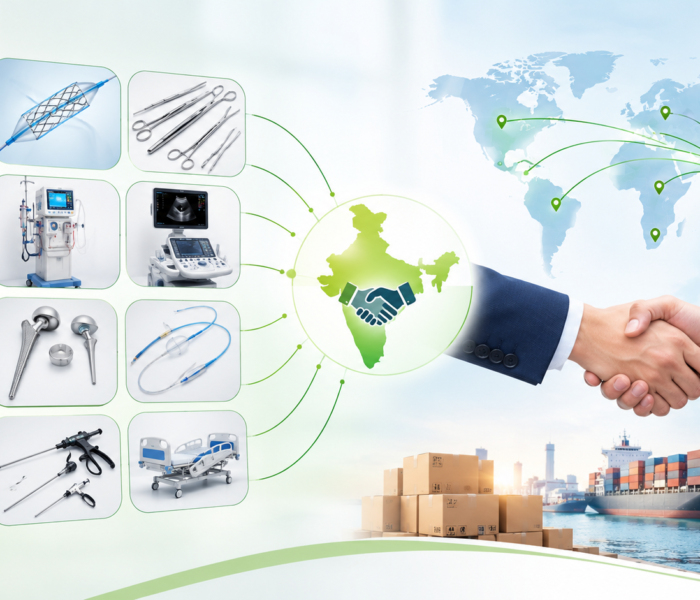
For decades, India imported a large share of its own advanced medical equipment. Now a growing number of manufacturers are building devices locally, from everyday hospital consumables to specialised products used in cardiology, nephrology, urology and eye care.
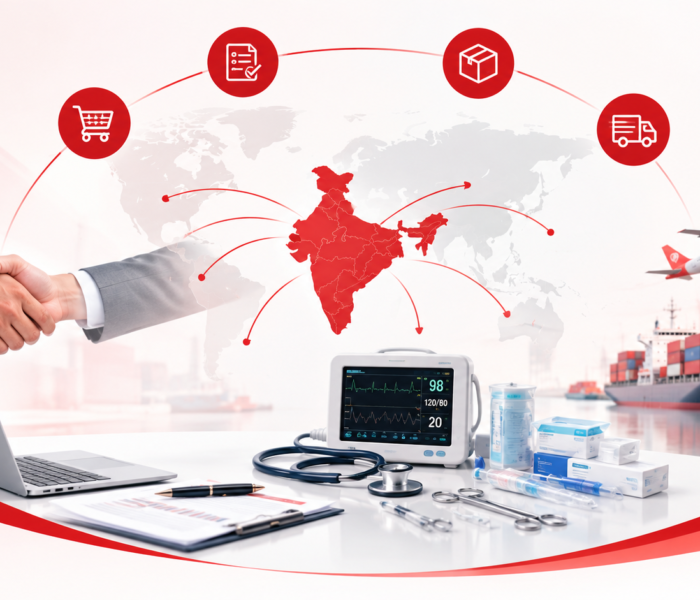
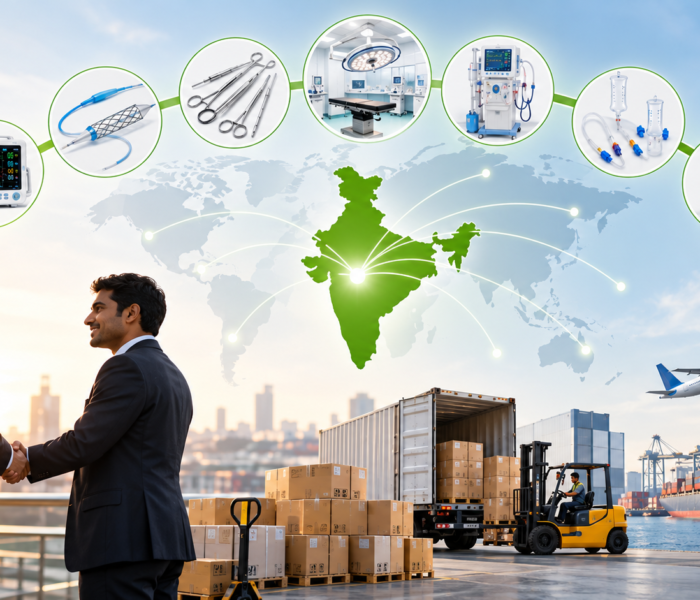
More local production means a wider, deeper pool of products to choose from. And that pool is exactly what international buyers tap into when they work with Medical exporters in India.
Why Should a Hospital Abroad Care?
Fair question. A policy made in New Delhi doesn’t automatically help a clinic in Cape Town. But the ripple effects reach further than you’d think.
- More choice, less dependence on one source
When production grows at home, buyers get more options in each category. If one brand is out of stock, another may be ready. That flexibility matters when you’re running an operating theatre or a dialysis unit that can’t wait weeks for a restock.
- Competitive pricing
India has long been known as a cost-conscious manufacturing base. Local production, local raw material access and a large domestic market all help keep prices sharp. For hospitals working with tight budgets, even a modest saving per unit adds up fast across bulk orders.
- Shorter, simpler supply lines
Products made and sourced within the same country move through fewer hands before they reach the exporter. Fewer hands usually means fewer delays and fewer surprises.
- Room for flexible orders
Because the market is large and varied, there’s often space for different order sizes and product mixes. A dispensary that needs a small, mixed consignment isn’t automatically sidelined.
What This Looks Like in Russia, Dubai and South Africa
Every market has its own personality. Here’s how the Indian supply story tends to fit each one.
Russia. Buyers here often want dependable access to a broad range of devices and a supplier who communicates clearly. India has a long trading history with Russia, and healthcare is a natural extension of it. Hospitals looking for steady, ongoing supply across categories like cardiology and surgical items often find Indian sourcing a practical fit.
Dubai and the wider UAE. Dubai is a hub. Buyers there serve not just local facilities but clients across the Gulf, Africa and Central Asia. Speed, variety and reliable communication count for a lot. A sourcing partner who can handle mixed product lists in a single coordinated shipment saves real time.
South Africa. Cost pressure is real across both public and private healthcare. Hospitals and dispensaries here are often hunting for good value without sacrificing availability. India’s pricing and product range speak directly to that need, and shipping routes between the two regions are well established.
The Role of a Good Export Partner
Here’s the thing nobody says out loud: Make in India creates opportunity, but opportunity isn’t the same as access. As a buyer overseas, you can’t easily walk through Indian factories, compare dozens of brands or chase down stock on the ground.
That’s where medical exporters earn their keep. A good one acts as your eyes, ears and negotiator in India. They find the products, compare suppliers, check availability, put together your order and coordinate the shipment, by air or sea, to your door.
This is the work Tcare4U does every day. Led by a team with more than 28 years in the medical device trade, Tcare4U helps hospitals, distributors, importers and healthcare organisations source products across cardiology, nephrology, urology, laparoscopy, ophthalmology, blood bank and surgical categories, then see the order through to delivery.
How to Get the Most Out of Sourcing from India
A few practical habits make the whole process smoother:
- Share your exact requirement. Product type, size, quantity and delivery location help your partner give accurate options quickly.
- Ask about shelf life. Knowing the expiry window before shipment helps you plan stock and avoid waste.
- Start with a trial order. A smaller first consignment lets you judge service and communication before scaling up.
- Confirm your local import rules. Every country has its own, so check with your own authorities before placing an order.
- Plan for lead time. Build in a buffer for production, packing and transit, especially for sea freight.
- Keep one point of contact. A single coordinator who knows your account beats chasing five different people.
Common Questions Buyers Ask
Is buying from India only about low prices?
Price is part of the appeal, but variety, availability and flexible ordering matter just as much to many buyers.
Can I order a mix of products in one shipment?
In many cases, yes. A sourcing partner can often consolidate different items into one coordinated consignment, depending on product availability.
How long does delivery take?
It depends on the products, quantity and whether you choose air or sea freight. Your exporter can give a realistic timeline once they know your requirement.
The Bottom Line
Make in India isn’t just a slogan on a billboard. It’s a real shift in where and how medical products are made, and it’s opening up fresh options for hospitals and dispensaries around the world.
If you’re in Russia, Dubai, South Africa or anywhere else, and you’re tired of limited choices and unreliable supply, it’s worth having a conversation with a sourcing partner who knows the Indian market inside out.
Ready to explore your options? Share your product list with the team at Tcare4U and get a quote tailored to your hospital or dispensary.