- Home
- About
- Products
- Cardiology
- Nephrology
- Urology
- Laparoscopy
- Ophthalmology
- Blood Bank
- Surgical Instruments
- Export Solutions
- Resources
- Contact
Medical Device Exporters from India | Tcare4U

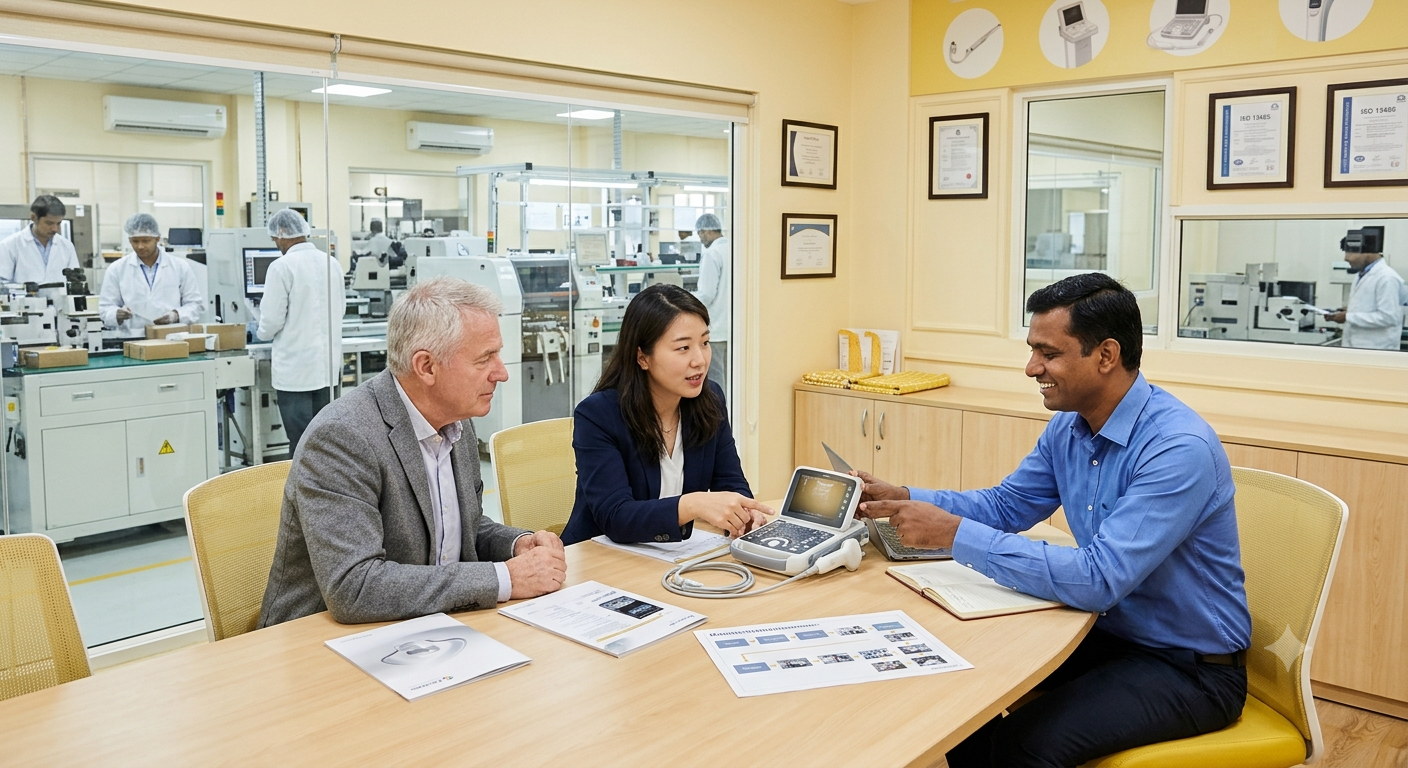
India has become an important sourcing destination for international healthcare businesses seeking medical devices, surgical instruments, medical equipment, and hospital consumables. For distributors looking to expand their product portfolios, India offers opportunities to explore different product categories and develop long-term supplier relationships.
However, finding the right sourcing partner involves more than comparing prices. International distributors need a partner who understands their purchasing requirements, communicates clearly, coordinates product enquiries efficiently, and supports a practical approach to repeat orders.
A reliable sourcing relationship can help distributors manage purchasing more effectively, respond to customer demand, and focus on growing their businesses.
In this article, we explore the key factors international distributors should consider when selecting an Indian medical device sourcing partner.
Understanding of Your Product Requirements
Every distribution business has different purchasing priorities. Some distributors focus on specialized cardiology products, while others supply surgical instruments, dialysis consumables, diagnostic equipment, or general hospital supplies.
Your sourcing partner should take the time to understand your product requirements rather than simply provide a generic quotation.
Consider whether the partner can understand your preferred brands, product specifications, required quantities, and expected purchasing frequency. Clear communication at the beginning can help identify suitable options and reduce unnecessary discussions.
For example, a distributor sourcing coronary catheters, guidewires, and PTCA balloons may have specific preferences regarding product models, sizes, and quantities. A well-organized sourcing discussion can help clarify these requirements before purchasing decisions are made.
What to look for: A sourcing partner who listens carefully, asks relevant questions, and understands the products your business needs.
Access to Multiple Medical Device Categories
International distributors often serve customers with diverse healthcare requirements. Working with separate suppliers for every product category can increase the time spent coordinating enquiries and planning purchases.
A sourcing partner with experience coordinating multiple categories may help simplify this process.
Depending on your requirements, these categories may include:
- Cardiology and interventional devices
- Surgical instruments and consumables
- Urology products
- Nephrology and dialysis supplies
- Diagnostic products and equipment
- ICU and hospital consumables
- Anesthesia and respiratory products
- Orthopedic products
- Hospital furniture and medical equipment
Access to a broader product range can help distributors explore additional purchasing opportunities and respond to requests from different customer segments.
However, product availability and sourcing options should always be confirmed for individual requirements. A broad product range does not necessarily mean every item is available from one manufacturer or ready for immediate dispatch.
What to look for: A partner who can coordinate enquiries across relevant product categories and provide clear updates about available options.
Clear and Consistent Communication
Communication plays a major role in international sourcing. Buyers and suppliers may work across different time zones, business cultures, and purchasing schedules.
Delayed replies, unclear product information, or inconsistent updates can make the buying process more difficult.
Before developing a long-term sourcing relationship, observe how the partner handles initial enquiries. Do they respond within a reasonable time? Do they clarify product requirements? Are they transparent about availability, pricing changes, and expected lead times?
Consistent communication is particularly important when coordinating orders involving several medical device categories.
A well-organized communication process helps buyers understand the next steps and make decisions with greater confidence.
What to look for: Responsive communication, clear answers, realistic expectations, and timely updates throughout the purchasing process.
Transparent Pricing and Competitive Purchasing Options
Competitive pricing is important for distributors working with limited margins and price-sensitive markets. However, the lowest quotation does not always represent the best overall purchasing option.
When comparing sourcing partners, consider the complete commercial picture, including product prices, quantities, packing arrangements, freight costs, and agreed shipping terms.
Make sure that quotations being compared relate to equivalent products and specifications. Differences in product models, packaging, quantities, or delivery arrangements can affect the final cost.
It is also helpful to discuss whether pricing may change with order quantities or repeat purchasing requirements.
A sourcing partner who explains commercial differences clearly can help you evaluate options more effectively and make purchasing decisions that suit your business objectives.
What to look for: Clear quotations, comparable product options, realistic pricing, and open communication about additional costs.
Product Availability and Reliable Order Coordination
For international distributors, product availability can directly affect customer satisfaction. A delayed or unavailable item may disrupt planned sales and create difficulties for customers who depend on timely supplies.
A good sourcing partner should communicate what is currently available, what needs to be sourced, and what lead times may apply.
This is particularly important when purchasing multiple product categories, as different items may have different availability and preparation timelines.
Rather than assuming that every product can be supplied immediately, distributors should discuss priorities and expected timelines before confirming an order.
Advance communication also makes it easier to identify alternative purchasing arrangements when the preferred product is temporarily unavailable.
What to look for: Honest availability updates, realistic lead times, and proactive communication when circumstances change.
Efficient Coordination of Multiple Orders
Managing several suppliers can create additional work for purchasing teams. Each supplier may have a different communication process, ordering schedule, and approach to shipment planning.
A central sourcing partner can help organize multiple enquiries and coordinate purchasing discussions across product categories.
For example, an importer sourcing surgical consumables, cardiology products, and general hospital supplies may prefer to share the overall requirement with one coordinating partner rather than manage every enquiry independently.
The partner can help organize the requests, communicate available options, and discuss suitable purchasing and shipment arrangements.
Although a central point of contact can simplify communication, the actual sourcing process may still involve multiple manufacturers or suppliers.
What to look for: Organized enquiry management, clear order updates, and practical coordination across different product categories.
Inventory Planning and Repeat-Order Support
A sourcing relationship becomes more valuable when it supports ongoing business needs rather than just individual purchases.
Distributors can improve purchasing efficiency by sharing expected demand, reviewing sales patterns, and planning repeat orders before inventory becomes critically low.
A sourcing partner who understands your regular purchasing requirements may be better positioned to coordinate future enquiries and discuss suitable options.
For frequently used hospital consumables, this could mean establishing a regular purchasing schedule. For specialized medical devices, it may involve planning purchases around confirmed customer requirements.
Distributors should also consider shelf life when purchasing expiry-sensitive products. Sharing remaining shelf-life preferences in advance can help the sourcing partner explore suitable available options.
What to look for: Willingness to discuss purchasing forecasts, repeat-order requirements, expected lead times, and inventory priorities.
Flexibility to Support Different Order Sizes
International distributors may have different purchasing needs at different stages of business growth.
An established distributor might place regular orders across several categories, while a growing business may begin with smaller quantities or focus on a limited selection of products.
A useful sourcing partner should be willing to discuss your requirements and explain the available purchasing options.
Depending on the product and source, minimum order quantities, pricing, and availability may vary. Understanding these factors early can help you plan purchases according to your budget and expected demand.
Flexibility does not necessarily mean every quantity or product combination can be accommodated. The important factor is whether the partner communicates the available options clearly.
What to look for: Practical discussions about order quantities, purchasing frequency, product availability, and opportunities for future growth.
Attention to Shelf Life and Product Handling
For medical consumables and other expiry-sensitive products, purchasing decisions should account for more than the initial price.
Distributors need to consider how quickly products are expected to sell, how much inventory they can reasonably maintain, and how much remaining shelf life they prefer when placing an order.
A sourcing partner should be able to discuss available options and understand your expectations before the purchase is finalized.
Buyers should also communicate any specific storage or handling preferences relevant to their products.
These conversations can help distributors plan their inventory more effectively and reduce the risk of holding products longer than expected.
What to look for: Clear communication about available shelf life, product condition, packaging, and relevant handling requirements.
Understanding of International Buyers and Their Markets
International distributors serve markets with different customer expectations, purchasing habits, and price points.
A sourcing partner who takes the time to understand your market can make sourcing discussions more relevant.
For example, a distributor supplying hospitals may prioritize dependable replenishment and a broad selection of frequently used products. A distributor serving specialized medical centres may focus on particular devices, specifications, or brands.
Discuss your target customer base, product priorities, expected demand, and future expansion plans with potential sourcing partners.
This helps establish whether the partner’s sourcing approach aligns with your business requirements.
What to look for: An interest in understanding your customers, market needs, preferred product range, and long-term purchasing plans.
A Long-Term Business Approach
The best sourcing relationships are built through consistent communication, realistic expectations, and a shared understanding of business objectives.
Before choosing a partner, consider whether they approach your enquiry as an opportunity to understand your requirements or simply as a one-time transaction.
A long-term approach may include discussing upcoming orders, reviewing product availability, sharing feedback, and exploring additional categories as your business grows.
Over time, this familiarity can make repeat purchasing discussions more efficient and help both parties plan future requirements.
International distributors should also periodically review supplier performance, considering factors such as responsiveness, consistency, order coordination, and the overall purchasing experience.
What to look for: A willingness to develop an ongoing business relationship rather than focusing exclusively on individual orders.
Why Consider Tcare4U for Medical Device Sourcing from India?
Tcare4U, operated by Dakshi and Shriya Associates in India, supports international buyers seeking medical devices, surgical instruments, medical equipment, and hospital consumables across multiple healthcare categories.
Our sourcing-oriented approach focuses on understanding buyer requirements, coordinating product enquiries, discussing available options, and helping international customers organize their purchasing needs.
Whether you are looking for cardiology products, surgical instruments, urology supplies, dialysis consumables, diagnostic products, or general hospital supplies, Tcare4U provides a point of contact for discussing your requirements.
We understand that every distributor has different priorities regarding product selection, purchasing quantities, price expectations, and order timelines. Sharing these details helps us understand your needs and discuss suitable sourcing options.
For international buyers exploring suppliers in India, a well-organized sourcing relationship can help make purchasing discussions more efficient and support long-term business development.
Conclusion
Choosing an Indian medical device sourcing partner requires careful consideration of product knowledge, category coverage, communication, pricing, availability, order coordination, and long-term business support.
The right partner should understand your purchasing requirements, communicate realistic expectations, and help you organize sourcing activities around your business needs.
By focusing on these factors, international distributors can develop more effective sourcing relationships, manage multiple product categories more efficiently, and build a stronger foundation for future growth.
India offers international healthcare businesses opportunities to explore a broad range of medical products. With a clear sourcing strategy and a suitable business partner, distributors can make the process more organized and focus on serving their customers.
Looking for a medical device sourcing partner in India?
Contact Tcare4U to share your product requirements and discuss sourcing options for your distribution business.