- Home
- About
- Products
- Cardiology
- Nephrology
- Urology
- Laparoscopy
- Ophthalmology
- Blood Bank
- Surgical Instruments
- Export Solutions
- Resources
- Contact


Walk into a busy hospital in Nairobi, Almaty or Dubai, and look at the supply room. Chances are you’ll spot products that began their journey in India.
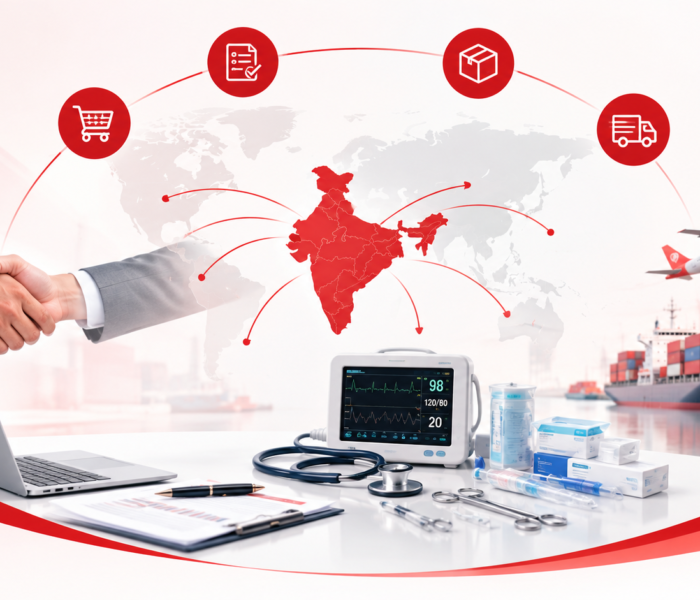
That’s not a coincidence. Over the past several years, Indian medical devices have found a steady place in the procurement lists of healthcare buyers across three very different regions. Different climates, different budgets, different languages. Yet the same question keeps coming up: where can we get dependable products at a sensible price, without a long wait?
More and more, the answer points to India.
Why These Three Regions Look to India
India sits close to all three. Shipping lanes are well established, trade relationships run deep, and many Indian businesses already speak the commercial language of these markets. But proximity is only part of the story.
Africa: value and availability
Healthcare budgets across much of Africa are stretched thin. Hospitals and dispensaries need consumables, diagnostic tools and surgical items in volume, and they need them at prices that let the budget go further. Indian products often fit that need well. Africa also has a long trading history with India, which makes the relationship feel familiar rather than new.
CIS: steady supply and broad range
Buyers in Russia and neighbouring CIS countries often want one thing above all: a dependable flow of product across many categories. Cardiology, surgical, urology and laparoscopy items are all in regular demand. India’s wide manufacturing base means a single sourcing partner can often cover a lot of that list.
Middle East: speed and variety
Dubai and the wider Gulf function as trading hubs. Buyers there often supply facilities across several countries, so they value variety, flexibility and quick turnaround. A mixed consignment from India, assembled and shipped together, suits that way of working.
What’s Driving the Growth
A few forces are pushing in the same direction.
- A growing manufacturing base. More Indian companies are making a wider range of devices, which gives buyers more to choose from.
- Competitive pricing. Lower production costs and strong domestic competition keep prices sensible.
- Demand for diverse suppliers. Many hospitals don’t want to rely on a single source anymore. Adding India to the mix spreads risk.
- Easier ordering. Sourcing partners now handle much of the legwork, so buying from India doesn’t require a buyer to build a network from scratch.
- Healthcare expansion. New hospitals, clinics and dialysis centres keep opening across all three regions, and each one needs equipment and consumables.
The Categories in Demand
Buyers in these regions tend to ask for a familiar set of product groups:
- Cardiology: catheters, guidewires, balloons and monitoring equipment
- Nephrology: dialyzers, fistula needles and dialysis consumables
- Urology: catheters, stents and collection systems
- Laparoscopy: graspers, trocars and camera systems
- Surgical items: instruments, drapes, sutures and gloves
- Blood bank: collection bags, storage and lab consumables
- Ophthalmology: diagnostic tools and clinic equipment
Where an Export Partner Makes the Difference
A growing market creates opportunity, but also noise. Hundreds of manufacturers, thousands of products and no easy way to tell who’s reliable from a desk overseas.
That’s why experienced Medical exporters in India matter so much. They know which manufacturers handle which products, who’s got stock and who’s likely to deliver on time. They compare options on your behalf, pull your order together and coordinate shipping by air or sea.
Tcare4U works in exactly this space. With more than 28 years of experience in the medical device trade, the team helps hospitals, distributors, importers and healthcare organisations source products across all the categories above, then manages the order through to delivery.
Tips for Buyers Entering the Indian Market
If you’re considering India for the first time, a few habits help:
- Write down your exact needs. Product type, size, quantity and delivery location.
- Ask about shelf life before shipment so you can plan your stock.
- Begin with a smaller trial order to get a feel for service and communication.
- Plan for transit time. Sea freight is economical but slower, and air freight is faster but costs more.
- Stay in touch with one point of contact who knows your account.
Common Questions
Can one supplier cover several product categories? Often, yes. A sourcing partner can combine items from different manufacturers into one coordinated order, depending on availability.
Is shipping to Africa, the CIS and the Middle East practical from India? Yes. Air and sea routes to all three regions are well established, and your export partner can advise on the best option for your order.
What’s the best way to start? Send your product list and quantities to a sourcing partner and ask for a quote. It’s the fastest way to see what’s available and what it costs.
Looking Ahead
Indian medical device exports to Africa, the CIS and the Middle East aren’t a passing trend. They’re growing out of real needs: affordable supply, wider choice and dependable service.
If you’re a hospital, dispensary or distributor in any of these regions, now’s a good time to explore what India can offer. Share your requirements with the team at Tcare4U, one of the dedicated medical exporters serving international buyers, and get a quote tailored to your needs.